Every firefighter wears a uniform, but not every uniform serves the same purpose.
Whether you're a new recruit, a department quartermaster, or a firefighter evaluating station wear options, understanding the difference between Class A and Class B firefighter uniforms is essential. While both represent professionalism and pride within the fire service, each serves a distinct role in daily operations and ceremonial events.
As firefighter apparel continues to evolve, modern departments are placing greater emphasis on safety, comfort, durability, and compliance with NFPA standards. In 2026, the distinction between Class A and Class B uniforms remains important—but today's Class B station wear is more advanced than ever before.
What Is a Class A Firefighter Uniform?
A Class A firefighter uniform is the formal dress uniform worn during ceremonial and official functions. Often referred to as a "dress uniform," it is designed to reflect professionalism, honor, and respect for the fire service.
Class A uniforms are typically worn during:
Award ceremonies
Promotion ceremonies
Funerals and memorial services
Weddings
Department banquets
Public appearances and parades
Honor guard events
Typical Class A Uniform Components
Most departments require:
Formal uniform cap with department insignia
Dress coat or uniform jacket
White or navy dress shirt
Badge and nameplate
Rank insignia
Tie or crossover tie
Dress trousers
Black dress shoes or polished boots
The Class A uniform symbolizes the traditions and professionalism of the fire service and is generally reserved for special occasions rather than daily operations.
What Is a Class B Firefighter Uniform?
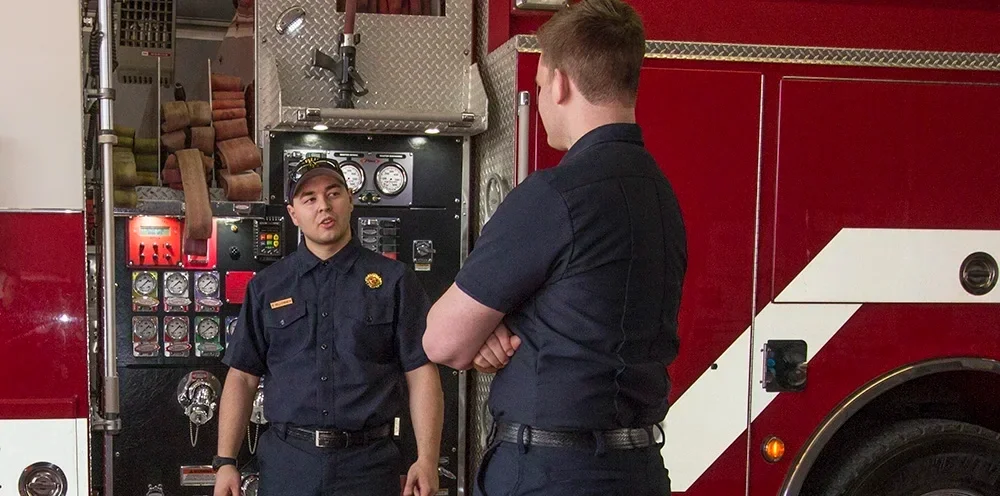
A Class B firefighter uniform is the everyday duty uniform worn for station work, training, public education events, inspections, and non-emergency operations.
Unlike the ceremonial appearance of Class A uniforms, Class B uniforms prioritize functionality, comfort, and safety while maintaining a professional appearance.
Today's Class B station wear often includes fire-resistant materials designed to provide an additional layer of protection beneath turnout gear.
Typical Class B Uniform Components
Fire-resistant duty shirt or polo
Fire-resistant station wear pants
Duty belt
Work boots
Department-issued outerwear
Optional station cap
Modern Class B uniforms are designed to withstand the demands of daily firehouse life while helping firefighters remain ready for rapid deployment.
Why NFPA 1970 (1975) Matters for Station Wear
One of the biggest developments in firefighter apparel over the last decade has been the growing adoption of NFPA 1970 (1975) compliant station wear.
NFPA 1970 (1975) establishes performance requirements for emergency services work apparel and helps ensure garments provide protection from incidental thermal exposure while maintaining durability and comfort.
When firefighters wear fire-resistant station wear beneath turnout gear, they gain important benefits:
Reduced risk of melting fabrics
Improved thermal protection
Enhanced durability
Longer garment lifespan
Increased compliance with department safety programs
Many departments are transitioning away from traditional cotton duty uniforms in favor of modern fire-resistant station wear that better aligns with current safety expectations.
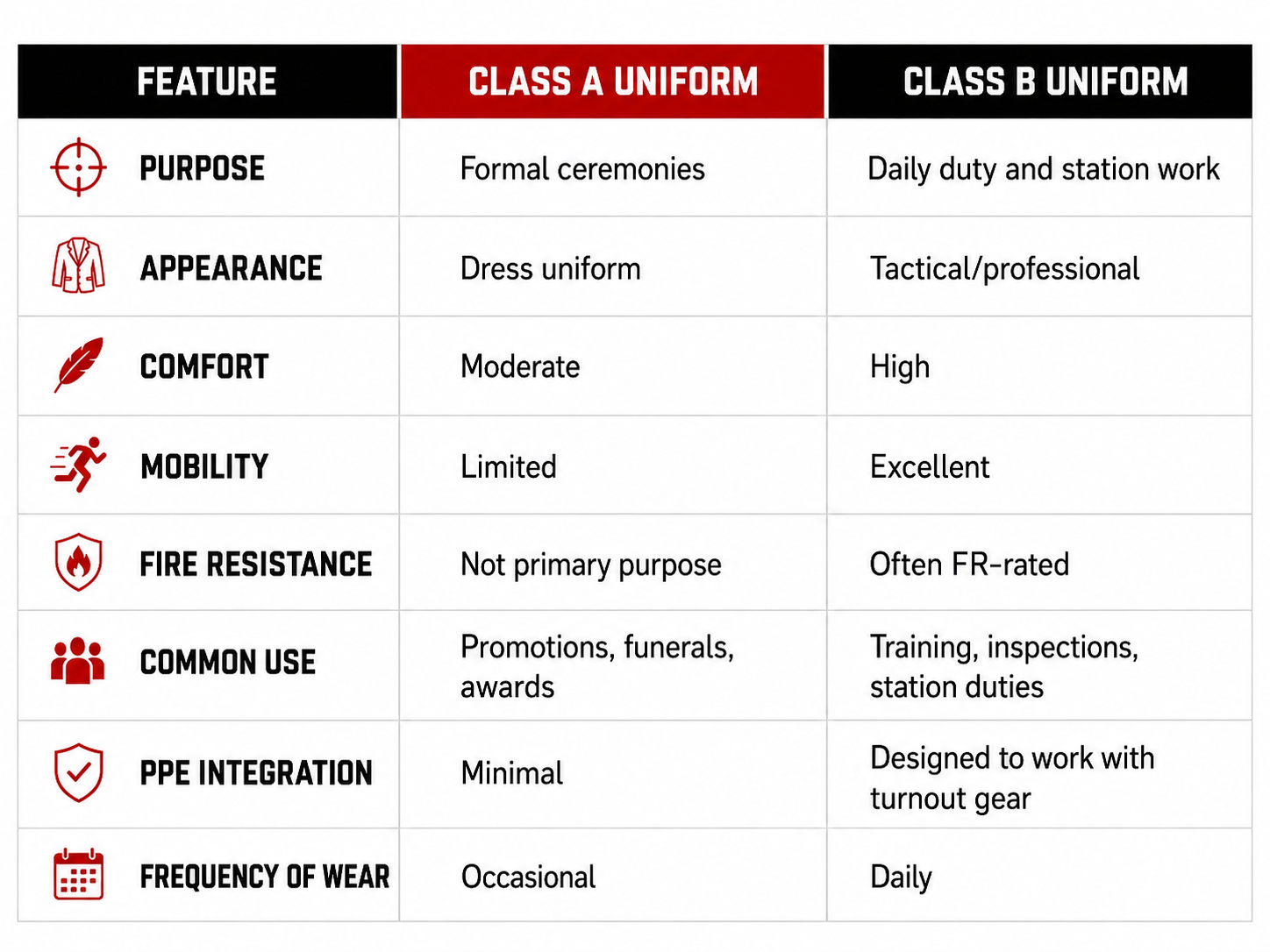
Class A vs. Class B Uniforms: Side-by-Side Comparison
The Evolution of Firefighter Station Wear in 2026
Today's firefighters expect more from their uniforms than previous generations.
Departments now evaluate station wear based on:
Safety
Modern FR fabrics help reduce secondary burn risks and provide added protection under turnout gear.
Comfort
Lightweight fabrics improve breathability during long shifts and demanding training exercises.
Durability
Advanced materials maintain appearance and performance after repeated washing and exposure to harsh environments.
Professional Appearance
Today's firefighters often interact directly with their communities through inspections, public education programs, and emergency response. Uniforms must present a professional image while supporting operational readiness.
For these reasons, departments nationwide are increasingly investing in purpose-built firefighter station wear rather than standard work uniforms.
Choosing the Right Station Wear
When selecting Class B uniforms, firefighters should consider:
NFPA 1970 (1975) compliance
Fire-resistant fabric construction
Comfort during long shifts
Durability and abrasion resistance
Proper fit and mobility
Department uniform requirements
CrewBoss offers a complete line of firefighter station wear designed specifically for the modern fire service. Our NFPA 1970 (1975) certified station wear shirts are built with fire-resistant fabrics that won't melt or ignite under turnout gear while maintaining a professional appearance throughout daily operations. Both Class A and Class B firefighter uniforms play important roles within the fire service. Class A uniforms honor the traditions and professionalism of the profession, while Class B uniforms support the demanding realities of everyday firefighting operations.
As departments continue prioritizing firefighter safety, comfort, and performance in 2026, investing in high-quality, NFPA-compliant station wear has become more important than ever. Modern fire-resistant Class B uniforms help firefighters stay protected, comfortable, and ready to respond when every second counts.
Frequently Asked Questions
Do firefighters wear Class A uniforms every day?
No. Class A uniforms are reserved for formal ceremonies, public appearances, memorial services, and special department events.
What is the purpose of a Class B firefighter uniform?
Class B uniforms provide a professional appearance while supporting daily station operations, training, inspections, and community engagement.
Is firefighter station wear considered PPE?
While station wear is not a replacement for turnout gear, NFPA 1970 (1975) compliant fire-resistant station wear provides an important additional layer of protection beneath PPE.
Are Class B uniforms fire resistant?
Many modern Class B uniforms are manufactured using fire-resistant fabrics such as Nomex® and Tecasafe®, helping improve firefighter safety during daily operations.
Browse our selection of Class B uniforms today and contact us with any questions.